

·
Selling R&D to the Paraguayan State: staged tenders, 30-day calls


Paraguay's Dirección Nacional de Contrataciones Públicas (DNCP), the public procurement authority, announced on 27 October 2026 that it had issued rules for public procurement of innovation (Compra Pública de Innovación, CPI). Resolución DNCP N° 3.033/26, dated 26 October and in force from the same day, sets out how public bodies can seek, commission and buy innovative solutions for needs that the products and services on the market cannot meet. It rests on Law No. 7021/2022 on public supply and procurement, Decree No. 2264/24 and Resolutions No. 203/2026 and No. 518/2026 of the Ministerio de Economía y Finanzas.
Two tenders in sequence
The resolution provides for two procedures, national or international:
- Licitación para Desarrollo de Solución Innovadora (code DS): pays for research, development, validation or testing when a solution does not exist or is not mature enough. It never covers the purchase of the resulting solution.
- Licitación para Compra de Solución Innovadora (code CS): used to buy and deploy a solution already developed and successfully validated in an earlier DS tender. Only the winners of that tender may bid.
The procedure cannot be used when fully developed solutions are available on the market: in that case ordinary tenders apply.
The rules for bidders
- Registration. Bidders must be listed in the Registro de Proveedores del Estado, the State supplier register.
- Timing. Calls must stay published on the procurement system for at least 30 calendar days before bids are opened in DS tenders and at least 15 in CS tenders. Questions can be sent until the fourth working day before opening.
- Fixed price. The contracting body sets the total budget and the budget for each technical stage; bids proposing a different budget are rejected.
- Guarantees. A bid bond of 5% of the budget for the stages (DS tenders) or of the bid (CS tenders); a performance bond of between 5% and 10% of the contract, by insurance policy or bank guarantee.
- Confidentiality. Bidders must state which documents are confidential and the rule that allows it, and which information is protected by intellectual property or trade secrets; otherwise the whole bid is public.
Shared risk and stage payments
A DS contract is carried out in technical stages. At the end of each one the contracting body rates the result as compliant or non-compliant. A non-compliant result arising from the nature of innovation ends the contract for that supplier without being a breach, provided the planned work was done with due diligence. Each stage carried out is paid whatever the outcome; the contracting body, however, commits only to the budget of the first stage, not to the overall budget.
The contracting body may award to several suppliers in order to develop and compare different solutions in parallel, and may offer "first customer benefits", such as better financial terms or preferential access to upgrades. The DS contract binds the supplier to bid in the later CS tender if the body decides to buy the solution.
According to the DNCP, the CPI was launched in 2023 with support from the Inter-American Development Bank and has so far produced two pilot projects, to which the DNCP has sent the new rules. One belongs to ANDE, the state power utility, which is seeking solutions to non-technical electricity losses on its low-voltage network, on average 14% of the energy it distributes according to the Reto ANDE page. The other belongs to ESSAP, the water utility, to reduce water that is distributed but not billed.
What it means for those doing business in Paraguay
- A new market for applied research. The DNCP names technology firms, start-ups, universities and research centres as the intended bidders.
- Bidders compete on the solution, not on price. With the budget fixed by the contracting body, what counts is technical fit and the maturity of the proposal.
- Technical risk is shared. A failed stage brings neither penalties nor loss of payment, as long as the work was carried out as agreed.
- Prepare before the call. Registering as a supplier and deciding what to declare confidential should be done in advance; whoever develops the solution also commits to bid in the purchase tender.
The rules for large contracts between the State and private partners are covered in the article on public-private partnerships. The partners.com page on the Company Incorporation service explains how a business is set up in Paraguay, the first step towards registering as a State supplier.
Sources
- Dirección Nacional de Contrataciones Públicas, rules for public procurement of innovation (27 October 2026)
- Resolución DNCP N° 3.033/26, special procedure for public procurement of innovation (26 October 2026, PDF)
- Dirección Nacional de Contrataciones Públicas, Reto ANDE pilot project
- Dirección Nacional de Contrataciones Públicas, Reto ESSAP pilot project
Ask our team
A few lines are enough. Our team in Asunción reads every request and replies in your language.
Read More

Company Incorporation
Paraguay's November tax deadlines moved back by up to 7 days
Under DNIT General Resolution 60/2026 of 9 November, November tax returns and payments move back by 1 to 7 days depending on the last digit of the RUC, with the final deadline on 26 November. Taxpayers who could not pay because their funds at ueno bank were unavailable can apply by 4 December for penalties to be waived on grounds of force majeure.


Company Incorporation
Builders: IDB-funded Asunción sewer collectors tender, PYG 225.9bn
Paraguay's public works ministry has opened an international tender to design and build the sewer collectors of Asunción's Lambaré basin: estimated value PYG 225,884,745,551, IDB financing, bids due on 28 December 2026. It is part of a USD 165 million programme serving more than 400,000 people.
Company Incorporation
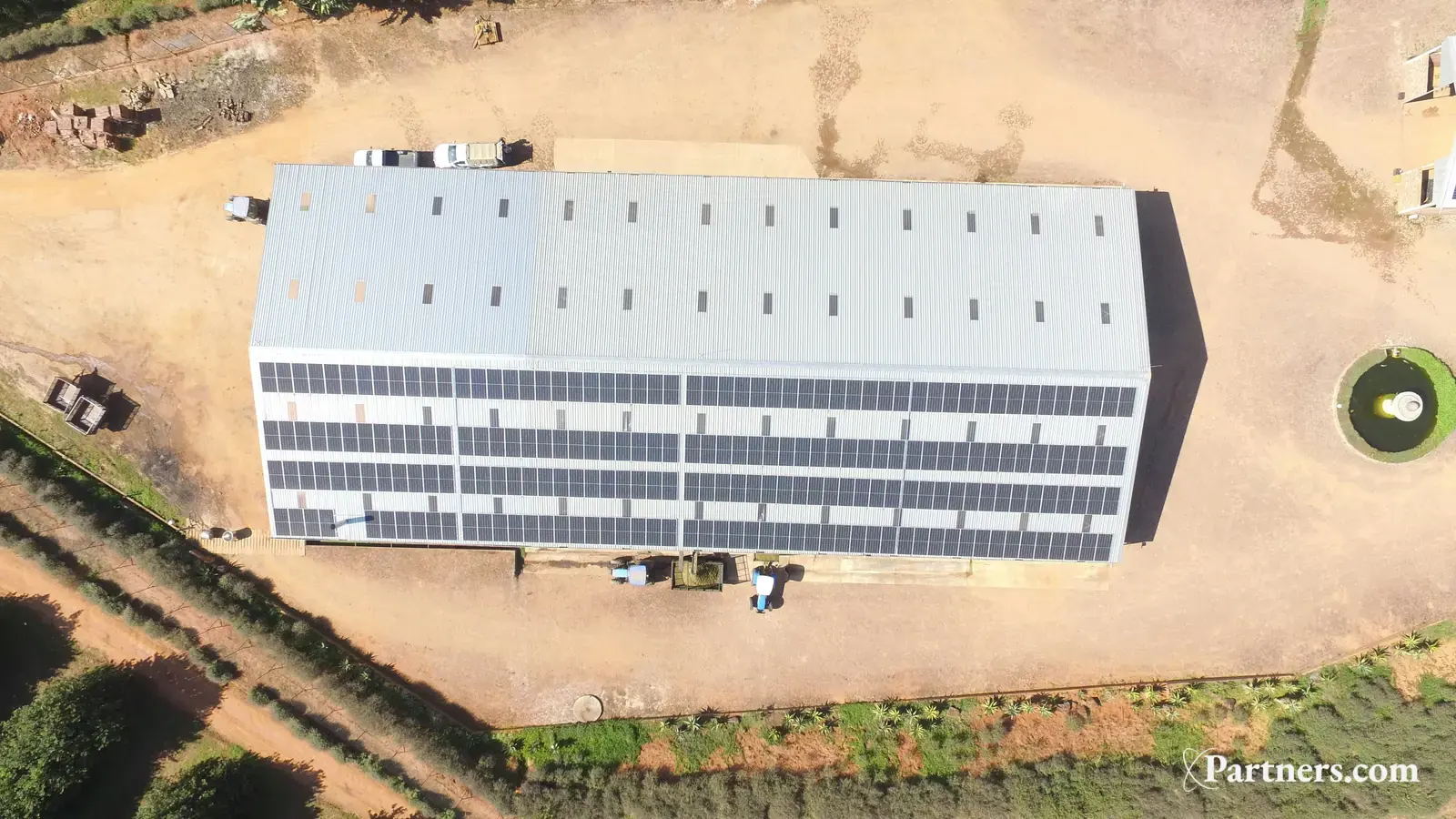
Own renewable plant: a registry instead of a licence up to 1 MW
On 6 November 2026 Paraguay's public works ministry announced that the registry is open for renewable self-generation and cogeneration plants of up to 1 MW. Plants within the limit do not need the ERNC licence, but must register before operating.