

·
Paraguayan beef exports to Israel reach USD 212 million in the first seven months of 2026, second market by value
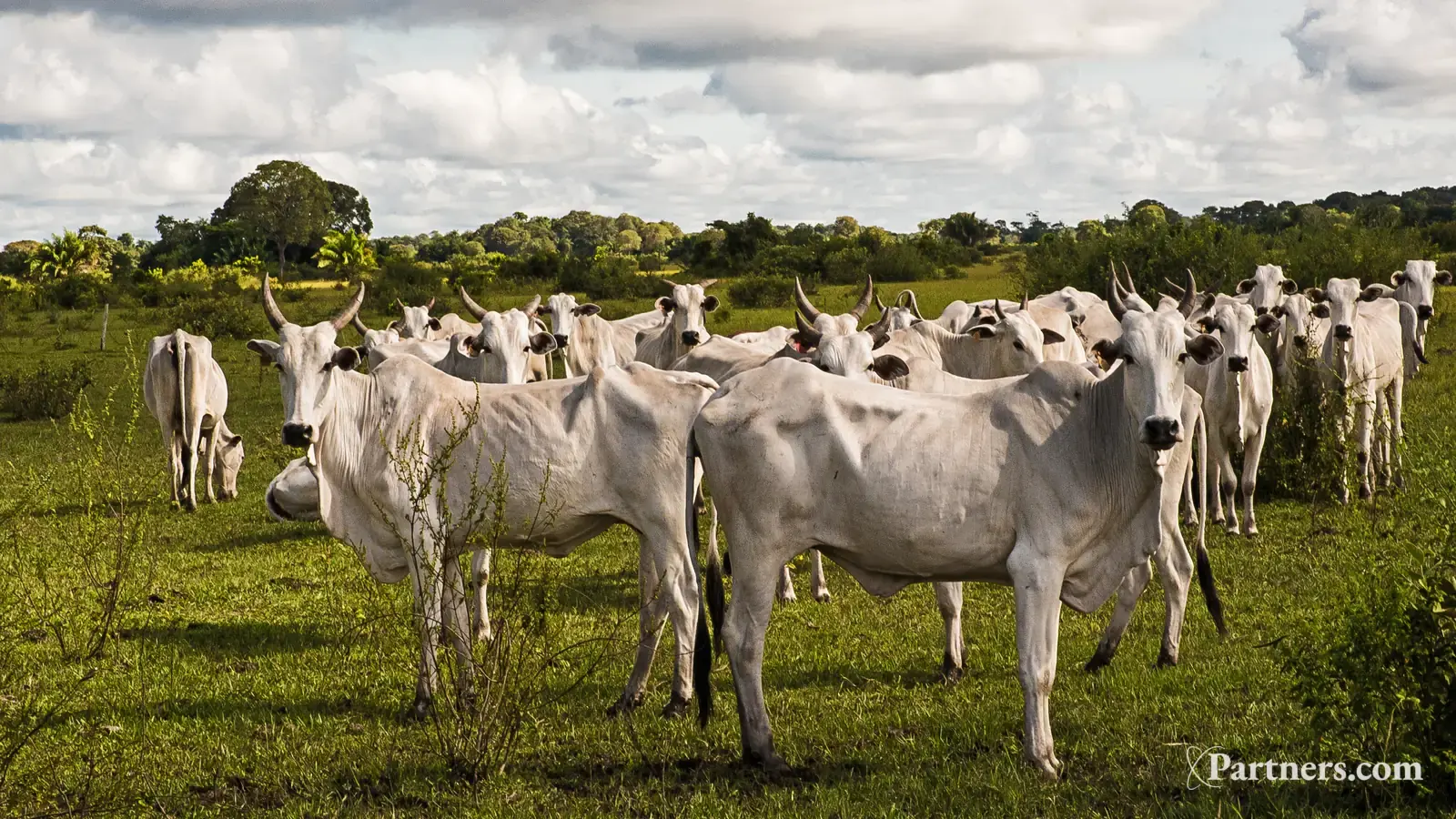


According to the progress report of Paraguay's animal health authority, the Servicio Nacional de Calidad y Salud Animal (SENACSA), covering the period to 31 July 2026, Paraguay exported 26,033,348 kilograms of beef worth USD 212,093,266.67 FOB to Israel between 1 January and 31 July. Israel is the second-largest market by value, behind Chile and ahead of the United States, and accounts for 18.9% of the USD 1,124.4 million of beef exported in the period. In the same months of 2025 shipments stood at 20,092,866.50 kilograms worth USD 128,998,839.70, 10.4% of the total, with Israel in third place. Year on year, volume rose by 29.6% and value by 64.4%.
A growing market against a shrinking total
The Israeli figure stands out against the overall trend. In the first seven months of 2026 beef exports certified by SENACSA fell to 162.6 million kilograms, 24.6% below the 215.7 million of the same period in 2025, and their value to USD 1,124.4 million, down 9.0%. Of the four main markets, only Israel and the United States grew; Chile and Taiwan fell compared with the first seven months of 2025.
The report also allows the average value per tonne to be derived. For Israel it is USD 8,147, against USD 6,420 in the first seven months of 2025; among the four main markets it is the highest, ahead of Taiwan (7,073), Chile (7,027) and the United States (5,870). This is why Israel ranks second by value while ranking third by volume: the United States took 30.1 million kilograms, four million more. July alone accounted for 6.4 million kilograms and USD 56.0 million, as a comparison with the report to 30 June shows.
For the whole of 2025 SENACSA's annual report records 33,882,736.19 kilograms of beef to Israel worth USD 225,536,393, the fourth-largest market, plus 2,916,991.87 kilograms of beef offal worth USD 5,247,935.95. Seven months of 2026 have therefore already reached 94% of the previous full year's value. In 2018, according to a SENACSA note, Israel was the fifth destination for Paraguayan beef and offal, with USD 71,578,585 and 5.5% of the total.
Why it is kosher: the Israeli rule
SENACSA's statistics classify shipments by destination and species, not by religious certification. The kosher requirement comes from the importing country's law. Israel's Frozen Meat Import Law, passed by the Knesset on 15 March 1994, prohibits importing meat without a kashrut certificate issued by the Council of the Chief Rabbinate of Israel or by a body it has authorised; the Minister of Industry and Trade may licence imports without a certificate only in the form and cases allowed until 13 July 1992. The amendment of 30 December 1994 renamed it the Meat and Meat Products Law and extended it to every kind of meat and meat product fit for human consumption, not only frozen meat.
Religious certification comes on top of sanitary approval. SENACSA has hosted several audits by Israel's official veterinary service. A first mission, concluded before April 2019, examined food safety, animal welfare, kosher slaughter, processing and cold storage at five plants and at the central laboratory in San Lorenzo. A second audit, opened on 16 March 2022, set out to verify that Paraguay's inspection system provides an equivalent level of sanitary protection and that products exported to Israel are safe, unadulterated and properly labelled.
The export process in Paraguay
On SENACSA's list of approved markets Israel appears as an authorised destination for three goods: beef, beef fat and beef offal. The list of plants approved for export has 21 entries, 15 of them for cattle, but does not state which markets each plant is approved for. According to SENACSA's export page, the exporting establishment must hold a valid SENACSA approval or registration. Each shipment requires an authorisation request, filed manually or electronically through the single export window, the Ventanilla Única de Exportación (VUE), and approved by the official veterinary inspection. The export authorisation and the official health certificate are then issued by the competent directorate (DIGECIPOA). Fees are charged on the FOB value.
What it means for those operating in Paraguay
- A market that rewards certified volume. The average value per tonne shipped to Israel exceeds that of the other major markets; the constraint is the dual sanitary and religious chain that applies to every lot.
- Kosher certification is a legal requirement, not a marketing choice. Without a certificate recognised by the Chief Rabbinate, meat does not enter Israel, save for the ministerial exceptions provided by the 1994 law.
- Approval is plant by plant. SENACSA export approval is the first step; for Israel, audits of the plants by Israel's veterinary service also count.
- Public, verifiable data. SENACSA's monthly reports, based on the health certificates issued, make it possible to track volumes and values by destination month by month.
- Offal too. Israel is approved for beef offal and fat: in the first seven months of 2026, 1,767,001.32 kilograms of offal were shipped, worth USD 3,076,982.74.
partners.com's Import & Export facilitation page explains how export procedures and dealings with the inspection authorities are organised in Paraguay.
Sources
- SENACSA, export and import report to 31 July 2026 (PDF)
- SENACSA, export and import report to 30 June 2026 (PDF)
- SENACSA, export and import report to 31 July 2025 (PDF)
- SENACSA, export and import report to 31 December 2025 (PDF)
- SENACSA, monthly report archive
- SENACSA, list of markets approved for Paraguayan meat
- SENACSA, list of plants approved for export
- SENACSA, export of products and by-products
- SENACSA, opening of the Israeli audit, 16 March 2022 (archived copy)
- SENACSA, closing meeting of the Israeli audit (archived copy, April 2019)
- Knesset, Frozen Meat Import Law, 1994 (PDF, Hebrew)
- Knesset, amendment of 30 December 1994 (PDF, Hebrew)
Ask our team
A few lines are enough. Our team in Asunción reads every request and replies in your language.
Read More
Import / Export
Meat for Taiwan: plant audit concluded, beef exports at USD 149.1m
On 9 November 2026 SENACSA announced that Taiwan's official audit of Paraguayan plants exporting beef and pork ended with satisfactory results. From January to July Taiwan bought USD 149.1 million of Paraguayan beef and 86% of the value of Paraguay's pork exports.


Import / Export
Trade on the Brazilian border: PY17 road paves 221 km in 4 sections
The PY17 road will link Pedro Juan Caballero, Zanja Pytã, Capitán Bado, Itanará and Ypejhú along the Brazilian border with 221 km of paved road, financed by a USD 220 million FONPLATA loan. The first section, 44 km from Pedro Juan Caballero under a PYG 391,554,309,003 contract, is due for completion by February 2028.
Import / Export
Buying goods in Paraguay: dollar at PYG 5,945 and payment upfront
The strong guaraní, with the dollar at PYG 5,945 in October 2026 against PYG 7,105 a year earlier, already cuts the local-currency income of exporters. Since 3 November ueno bank's customers, with the bank in resolution at the Banco Central del Paraguay, also have their accounts frozen: for buyers of goods for export, immediate payment becomes the most valued term.