

·
Riverside homes: Ayolas expropriation bill, emergency in 4 departments
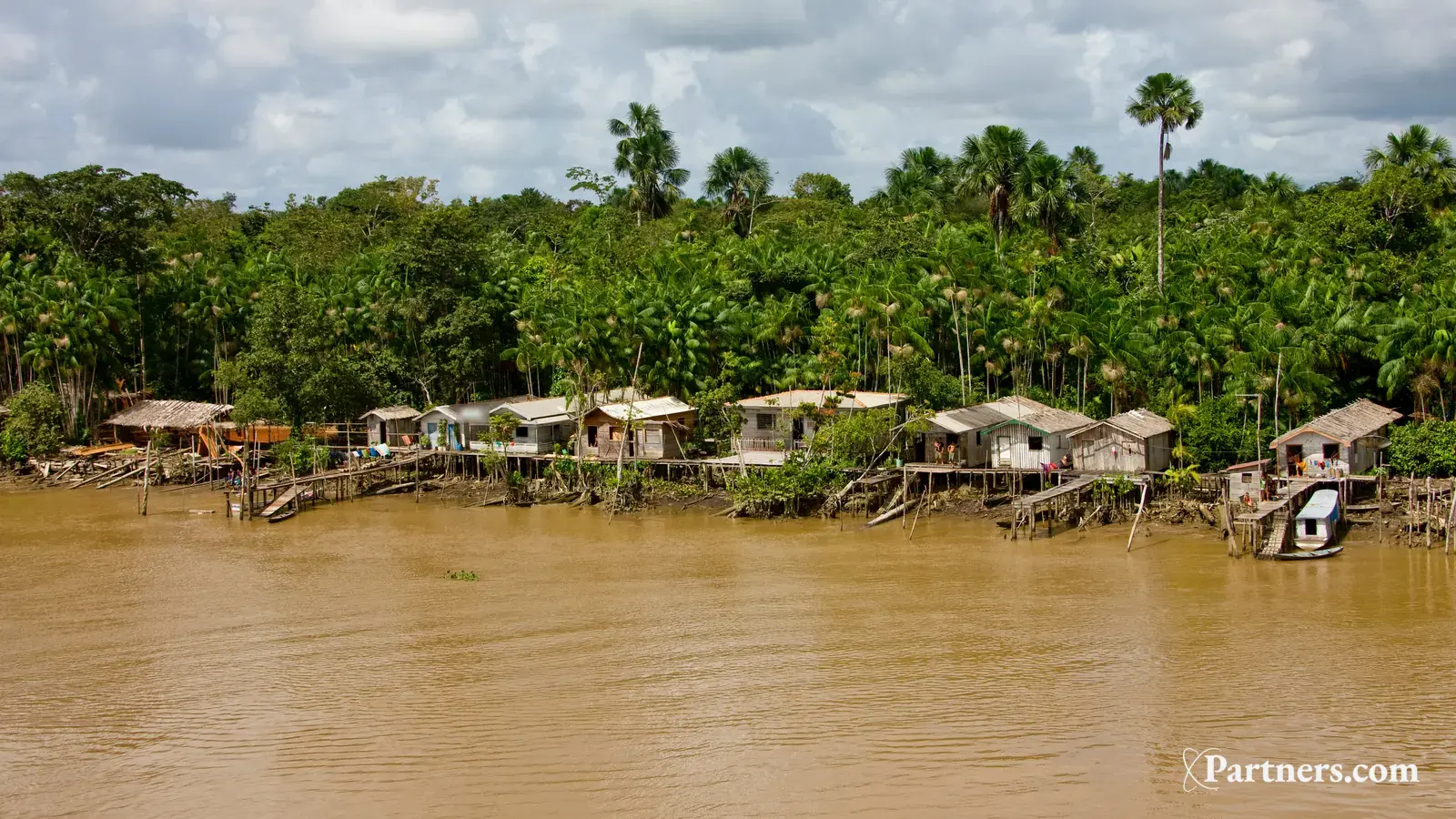


Anyone who owns or is considering property along the Paraná and Paraguay rivers has three October public acts to read. On 22 October 2026 the Chamber of Deputies announced a bill to declare of public utility and expropriate, in favour of the Ministerio de Obras Públicas y Comunicaciones (MOPC), the properties and improvements affected by the coastal defence of Ayolas, in the department of Misiones. On 21 October the same Chamber had approved a hydrometeorological emergency in Itapúa, Alto Paraná, Misiones and Ñeembucú. And on 18 October, in Pilar, the MOPC closed the gates of the coastal defence.
Ayolas: what the expropriation bill says
The bill is titled «Que declara de utilidad pública y expropia a favor del Estado Paraguayo – Ministerio de Obras Públicas y Comunicaciones (MOPC), varios inmuebles y mejoras, afectados a obras de infraestructura (construcción de la defensa costera de la ciudad de Ayolas)». The text provides procedures to guarantee prior payment of fair compensation to the owners of the properties affected.
This is a bill tabled by five deputies, not a law: the statement does not publish the list of properties, their areas or any amounts.
The framework is Article 109 of the Constitution, which another expropriation bill considered by Congress, file S-2502805, quotes as follows: «Nadie puede ser privado de su propiedad sino en virtud de sentencia judicial, pero se admite la expropiación por causa de utilidad pública o de interés social, que será determinada en cada caso por ley. Esta garantizará el previo pago de una justa indemnización establecida convencionalmente o por sentencia judicial». In practice, each expropriation needs its own law, and the amount is set by agreement with the owner or, failing that, by a judge.
The emergency in four departments
The bill approved on 21 October aims to coordinate the Secretaría de Emergencia Nacional (SEN), the departmental governments and the municipalities, and to mobilise the resources needed. Its statement of reasons lists among the main risks damage to homes, the disruption of roads and basic services, and areas close to rivers and streams. The statement reports approval in that house and gives no date for the Senate's review: the text should be followed through to promulgation.
Pilar: the three phases of the coastal defence
Phase A shields the city from the Paraguay River's floods. The protocol started at 17:30 on 18 October, when the Paraguay River reached the design level of +51.50 metres: the gates upstream and downstream of the Ñeembucú stream are closed and water is pumped out of the protected area. The Ñeembucú station has eight 500 HP pumps, seven in operation and one in reserve, with a capacity of 4,950 litres per second; the system is run by Consorcio CTC under MOPC control.
Phase B covers sewerage and drainage. The update of 8 October lists storm-water networks in the 12 de Octubre, Manufacturas de Pilar, San Lorenzo 2 and Colinas basins and names the Juan Pablo II, Villa Paso and San Rafael districts as direct beneficiaries; on 20 October the ministry reported on the treatment-plant site. Phase C, described on 22 September, is the riverside avenue (avenida costanera) with a linear park, on four fronts from San Quintín to route PY19 and in the Sector Sur.
Other towns on the Paraguay River
In Concepción the coastal defence has opened new fronts to the north and south; the project includes containment, pumping, channels, a linear park and a riverside avenue. In Alberdi, in Ñeembucú, the MOPC signed in July a PYG 23,482 million contract with Teco S.R.L., running to 2027, to restore the wall and the pumping system.
On the Paraná, Itaipú Binacional reported on 22 October a gradual fall in the river, to 116.81 metres above sea level at its latest reading. The causes of the flood and its effect on logistics are covered in an earlier article.
What it means for those doing business in Paraguay
- In Ayolas, the route matters. A property on the path of the coastal defence can be expropriated by law: before buying, ask the MOPC and Congress whether the plot is on the bill's list.
- Expropriation is paid first. The Constitution guarantees prior payment of fair compensation, set by agreement or by a judge; the Ayolas law will have to set out the procedure.
- In Pilar, protection has a trigger level. Phase A goes into operation at +51.50 metres: where a plot sits in relation to the protected area and the Phase B drainage basins is a point to check.
Checking title to rural land was covered in the article on land titles and INDERT. The partners.com page on the Real Estate service includes checking where a property stands in relation to restrictions, public works and exposed areas before signing.
Sources
- Chamber of Deputies, expropriation bill for the Ayolas coastal defence (22 October 2026)
- Chamber of Deputies, hydrometeorological emergency in four departments (21 October 2026)
- MOPC, activation of the Pilar coastal defence (19 October 2026)
- MOPC, Phase B treatment plant in Pilar (20 October 2026)
- MOPC, active Phase B fronts in Pilar (8 October 2026)
- MOPC, Phase C riverside avenue and linear park in Pilar (22 September 2026)
- MOPC, Concepción coastal defence (2 October 2026)
- MOPC, contract for the Alberdi coastal defence (21 July 2026)
- Itaipú Binacional, falling Paraná and assistance in Ciudad del Este (22 October 2026)
- National Congress, file S-2502805, quoting Article 109 of the Constitution (PDF)
Ask our team
A few lines are enough. Our team in Asunción reads every request and replies in your language.
Read More

Real Estate
Property in Paraguay: with 3m accounts frozen, cash buyers lead
Since 3 November 2026 ueno bank's 3 million customers cannot use their accounts or cards, until the exclusion balance sheet that the Banco Central del Paraguay closes within 15 days. Buyers with funds already available at another bank now negotiate with sellers who need certainty on timing.

Real Estate
Land in the Bajo Chaco: 166-km PY12 road 79% done on first section
The first section of the PY12 road, from km 2.5 to km 37.4 beyond Chaco'i, is 79% complete with 24.86 km of asphalt surface laid, and the bridges over the Confuso'i and Negro rivers are at 98% and 99%. The IDB-financed project links Chaco'i and General Bruguez over 166 km in the department of Presidente Hayes.

Real Estate
Homes around Asunción: Plan Central 3 is paving 72.47 km of roads
The MOPC's Plan Central 3 covers 72.47 kilometres of roads in Lambaré, Luque, Itauguá and Nueva Asunción; in Itauguá alone the lot exceeds 25 kilometres. On the D027 road between San Lorenzo and Itá, 26.3 kilometres of works worth PYG 200,897,179,309 add bus lanes.