

·
Paraguay's SENACSA temporarily bans imports of birds, eggs and poultry products from Santa Catarina over Newcastle disease
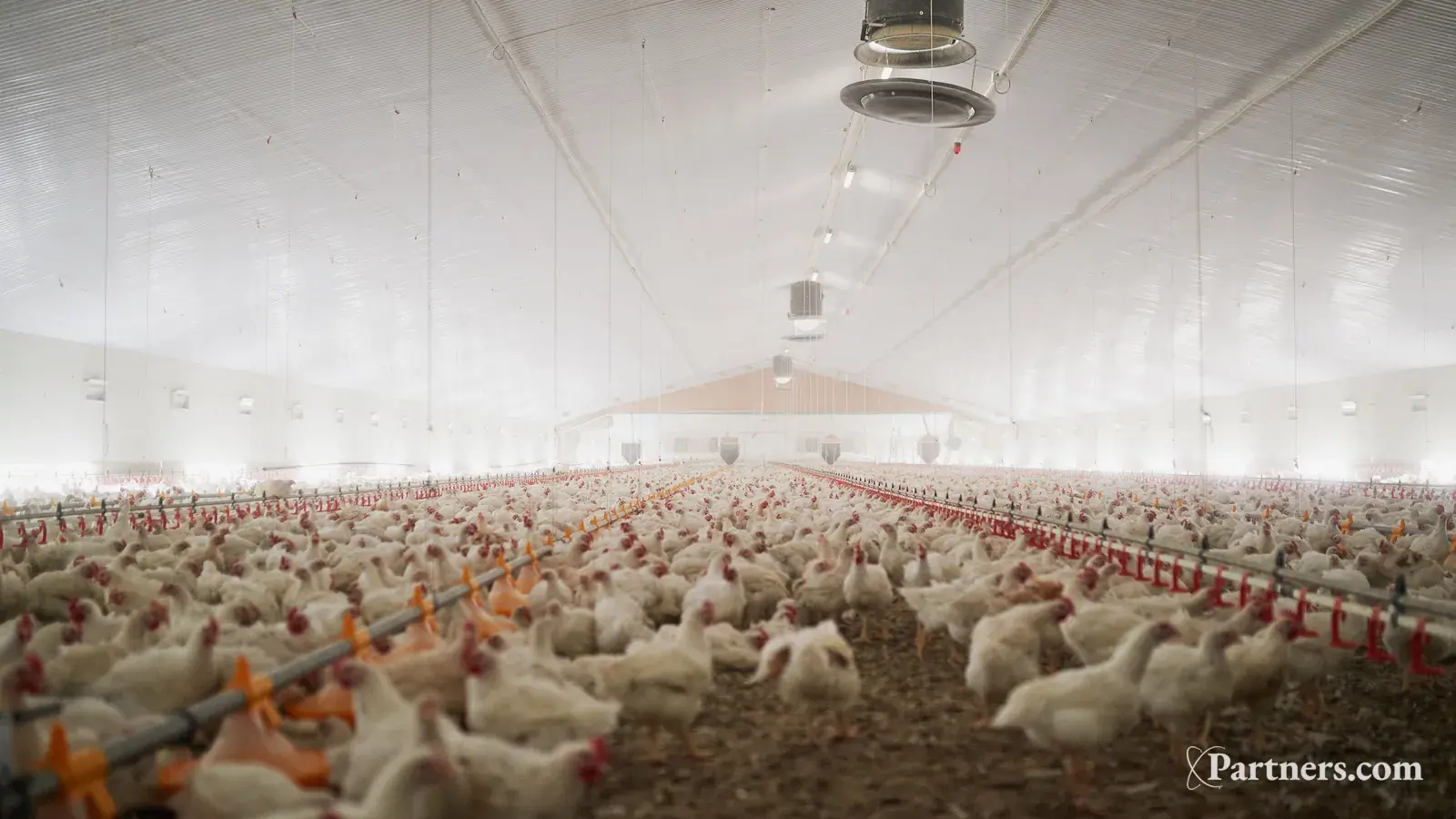


Paraguay's animal health authority, the Servicio Nacional de Calidad y Salud Animal (SENACSA), has temporarily banned imports of live birds, eggs, products of avian origin and avian genetic material from the state of Santa Catarina in Brazil. The measure is set out in Resolution No. 1715 of 20 October 2026, signed by the agency's president, and follows confirmation of a Newcastle disease outbreak at a commercial turkey-fattening farm in the municipality of Nova Itaberaba. SENACSA announced it the same day in an official statement.
What the ban covers and what is exempt
The resolution contains three operative provisions. The first bars four categories of goods, live birds, eggs, products of avian origin and avian genetic material, from entering Paraguay when they come from Santa Catarina; the rest of Brazil is not affected. The second exempts products that show, through official veterinary certification, that they have undergone virus inactivation treatments and measures against recontamination, in line with Articles 10.9.11 and 10.9.15 to 10.9.21 of the WOAH Terrestrial Animal Health Code; even these require SENACSA's prior authorisation and compliance with the other national import requirements. The third keeps the measure in force until SENACSA has an updated sanitary risk assessment, in line with international protocols: the act sets no expiry date.
The Code articles cited deal with processed goods: egg products (10.9.11), poultry meat products (10.9.15), other products of poultry origin (10.9.16), feathers and down (10.9.17 and 10.9.18), feather meal and poultry meal (10.9.19), plus the time and temperature tables for inactivating the virus in eggs (10.9.20) and meat (10.9.21). The resolution does not cite the Code articles on live birds, day-old chicks, hatching eggs, eggs for human consumption or fresh meat: for those goods the exemption has no basis and the ban applies with no alternative route. For poultry meat, for example, the Code treats the virus as inactivated at a core temperature of 70 °C held for 3.6 seconds, or 65 °C for 39.8 seconds.
The outbreak in Brazil
Brazil's Ministry of Agriculture and Livestock (MAPA) confirmed the outbreak on 18 October 2026 after an epidemiological investigation by the state veterinary service; the diagnosis came from the Federal Agricultural Defence Laboratory in São Paulo, a WOAH reference laboratory for the disease. The farm has been placed under quarantine with all bird movements halted; samples had been collected between 21 September and 14 October and the birds were not sent for slaughter. The flock is to be culled and the site cleaned and disinfected, with 133 properties to be monitored in a restricted area covering Nova Itaberaba and the neighbouring municipalities of Coronel Freitas, Nova Erechim and Águas Frias. According to the SENACSA resolution, Brazil has notified the outbreaks to WOAH.
Paraguay is not the only trading partner to react. In its update of 20 October MAPA lists Mexico, which has suspended live birds, poultry meat and offal, hatching eggs and chicks from the whole of Brazil; China, which has confined its suspension of poultry meat to Santa Catarina; and Chile, which has suspended, among other goods, hatching and table eggs, day-old chicks and fresh poultry meat from Santa Catarina.
Why Paraguay is guarding its status
According to SENACSA's animal health programme page, Newcastle disease has not been diagnosed in Paraguay since 1997 and the country declared itself free of it in 2000 under Decree No. 11,469; the status is supported by annual sampling of poultry, wild and migratory birds. The disease is compulsorily notifiable, and the resolution cites the list of notifiable diseases updated by SENACSA on 1 September 2026. Under the WOAH Code, a country or zone that loses its free status may regain it three months after stamping out with disinfection, provided surveillance continues throughout that period.
Paraguay's poultry sector is also an exporter. SENACSA's report to 31 July 2026 records poultry meat exports between January and July of 5,890,531 kilograms worth USD 8,936,434.28 FOB, up 79.65% by volume and 67.64% by value on the same period of 2025. The same report shows Brazil as the leading origin of imported edible animal by-products, with 13,104,738.66 kilograms worth USD 41,021,561.37 FOB, but does not break out the poultry share or the state of origin. On credit to the sector, partners.com has already covered the AFD's record poultry financing.
What it means for those operating in Paraguay
- Check the origin of every lot. The ban applies by state of origin: poultry goods from other Brazilian states remain subject to the ordinary requirements, those from Santa Catarina do not.
- Fresh products and live material are stopped. Live birds, hatching eggs, table eggs, fresh meat and genetic material from Santa Catarina fall outside the Code articles cited for the exemptions.
- Processed goods need a certificate and a permit. Egg products, meat products, derived products, feathers and meals may enter only with an official veterinary certificate attesting inactivation treatment and protection against recontamination, plus SENACSA's prior authorisation.
- No lifting date. The measure lasts until a new SENACSA risk assessment: supply contracts with deliveries from Santa Catarina should be reviewed without relying on an end date.
- Knock-on effects downstream. Businesses relying on genetic material or hatching eggs from that origin need alternative suppliers already approved by SENACSA.
partners.com's Import & Export facilitation page explains how import procedures and dealings with the animal health authorities are organised in Paraguay.
Sources
- SENACSA, Resolution No. 1715 of 20 October 2026 (PDF)
- SENACSA, statement of 20 October 2026
- SENACSA, Newcastle disease health programme
- MAPA (Brazil), confirmation of the outbreak, 19 October 2026
- MAPA (Brazil), sanitary measures and monitoring area, 19 October 2026
- MAPA (Brazil), trading partners' restrictions, 20 October 2026
- WOAH, Terrestrial Animal Health Code, chapter 10.9 (PDF, Spanish)
- SENACSA, export and import report to 31 July 2026 (PDF)
Ask our team
A few lines are enough. Our team in Asunción reads every request and replies in your language.
Read More
Import / Export
Meat for Taiwan: plant audit concluded, beef exports at USD 149.1m
On 9 November 2026 SENACSA announced that Taiwan's official audit of Paraguayan plants exporting beef and pork ended with satisfactory results. From January to July Taiwan bought USD 149.1 million of Paraguayan beef and 86% of the value of Paraguay's pork exports.


Import / Export
Trade on the Brazilian border: PY17 road paves 221 km in 4 sections
The PY17 road will link Pedro Juan Caballero, Zanja Pytã, Capitán Bado, Itanará and Ypejhú along the Brazilian border with 221 km of paved road, financed by a USD 220 million FONPLATA loan. The first section, 44 km from Pedro Juan Caballero under a PYG 391,554,309,003 contract, is due for completion by February 2028.
Import / Export
Buying goods in Paraguay: dollar at PYG 5,945 and payment upfront
The strong guaraní, with the dollar at PYG 5,945 in October 2026 against PYG 7,105 a year earlier, already cuts the local-currency income of exporters. Since 3 November ueno bank's customers, with the bank in resolution at the Banco Central del Paraguay, also have their accounts frozen: for buyers of goods for export, immediate payment becomes the most valued term.